
What affects hydroseeding cost?
iHydroseed™ does not publish made-up universal pricing. Hydroseeding cost depends on site conditions, materials, scope, travel, and what the project needs to succeed.
Project size and access
Square footage or acreage matters, but so do slopes, access, water availability, hose distance, mobilization, and site preparation.
Materials and rates
Seed mix, mulch type, mulch rate, tackifier, fertilizer, soil amendments, and erosion-control products all affect the final number.
Contractor scope
A simple lawn, commercial site, reclamation job, and erosion-control project may require very different equipment, labor, and risk assumptions.
For equipment, material, or supply questions, visit Hydroseed Supply™.
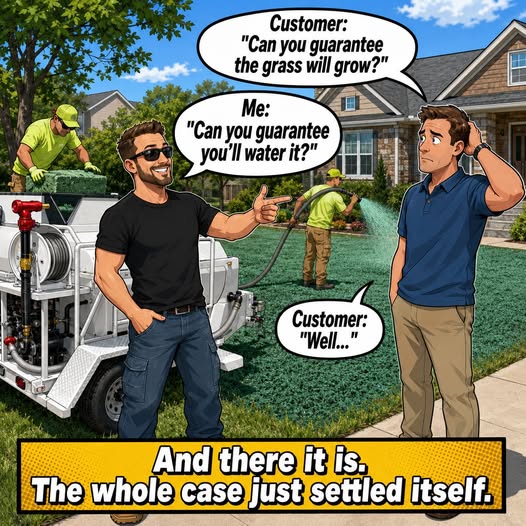
The variable nobody puts in the bid.
The biggest swing on hydroseeding cost isn’t the bid — it’s what happens after the truck leaves. Watering, weather, prep, and timing usually decide whether a job comes in at the low end of the range or the high end (or has to get re-done).
What actually drives the number on your estimate
Any figures below are illustrative only. Typical industry ranges vary widely by region, season, and job specifics. Use them to understand why costs move, not as a quote. Always get a written estimate from a local contractor.
Contractor minimums (why there’s a floor price)
Almost every hydroseeding contractor has a job minimum, and it can surprise homeowners with small yards. Loading a tank, mixing slurry, driving to your site, spraying, cleaning out the machine, and driving back takes roughly the same effort whether your lawn is 2,000 square feet or 6,000. Below a certain size, the fixed cost of just showing up dominates. If your project is under the minimum, it’s often worth asking whether a neighbor wants theirs done the same day so mobilization gets shared across more square footage.
Load-size economics (how tank size drives cost)
Each tankful of slurry covers a predictable amount of ground, and your job’s cost hinges on how cleanly it fits into those loads. A project that fills one tank efficiently is cheaper per square foot than one that needs “a tank and a half,” because that leftover partial load still costs time to mix, spray, and refill. Bigger tanks generally mean fewer refill cycles per acre — part of why larger contractors can sometimes offer better per-acre rates on big jobs.
Residential vs. acreage pricing
Residential lawns are usually priced per square foot because they’re small, detailed, and full of obstacles that slow the crew down. Larger properties flip to per-acre pricing, where the work becomes about coverage speed rather than trimming around features. An acre is roughly 43,560 square feet, so acreage pricing that looks small per acre can still be a real total — but the rate per unit of area almost always favors bigger jobs. When comparing quotes, make sure you’re comparing the same unit.
Site preparation
Hydroseed grows best on a prepared seedbed. If your site needs grading, debris removal, rock raking, or topsoil amendment, that work either adds to the bill or falls on you to handle first. Some contractors include light prep; others quote seeding only and assume the ground is ready — a major source of “why is their bid so much lower?” confusion. Always confirm exactly what prep is and isn’t included.
Mulch application rate
The mulch in the slurry protects seed, holds moisture, and buffers temperature swings while grass establishes. Heavier application rates (measured in pounds per acre) cost more because they use more material, but that extra mulch improves germination — especially in heat or on exposed ground. When you see a big price gap between bids, mulch rate and mulch type are often hiding in the difference.
Water access
Hydroseeding is mostly water by volume. If the crew can fill from a spigot or hydrant near your site, filling is fast and cheap. No usable water source means hauling it in — extra trips, time, and cost. Rural and undeveloped lots are the usual culprits; mention it early so you get an accurate bid instead of a day-of surprise.
Slope and erosion-control upgrades
Slopes and erosion-prone areas need stronger products to hold seed and soil in place: Bonded Fiber Matrix (BFM), Flexible Growth Medium, tackifiers, and rolled erosion-control blankets on the steepest areas. These cost more per square foot, but on a slope they’re often not optional — standard hydroseed can wash off before it roots. Be skeptical of any quote that ignores an obvious slope.
Travel and mobilization
Getting the rig to your site isn’t free. Contractors factor in drive time, fuel, and mobilization. Jobs close to the contractor’s yard carry lighter travel cost; a long haul can add a mobilization charge on top of the seeding price. Booking when a crew is already working in your area can occasionally save money.
Good / Better / Best expectations
Good
Standard wood-fiber mulch at a baseline rate, general-purpose seed mix, minimal prep, flat ground. Gets grass growing at the lowest cost; less margin for error in tough conditions.
Better
Higher mulch rate, seed matched to your sun/soil, some included prep, and a tackifier for extra hold. More reliable establishment across more conditions.
Best
Premium mulch or BFM, a custom seed blend, thorough prep, erosion control where needed, stronger germination support. Highest cost, best odds of a full lawn the first time.
The right tier depends on your site and risk tolerance, not on which bid is cheapest. A “Good” job on a flat, easy lot can be perfect; the same approach on a steep slope can fail.
Why roadside / DOT pricing isn’t a residential benchmark
Very low per-acre numbers quoted for highway and DOT hydroseeding aren’t a fair comparison to a home lawn. Roadside work is spec’d for erosion control and revegetation across huge, open, machine-friendly stretches, using utility-grade seed mixes and minimal detail work — coverage that would look sparse in a backyard. Judge your bid against other residential bids, not against highway contracts.
Ballpark your project (estimator coming soon)
We’re building an interactive estimator that walks through the same factors a good contractor considers — not a fake price, but a realistic sense of where your project lands. It asks about project size, residential vs. acreage, slope and erosion areas, on-site water, prep needs, quality tier, and region. Until then, the fastest path to a real number is a written estimate.
Estimate your hydroseeding cost
Get a fast, ballpark price for your project — enter your square footage or acreage and see an estimated range instantly.
Open the Hydroseeding Cost Calculator →Estimates only. Final pricing depends on site conditions, prep, mulch rate, slope, and access.